When Repairs Stop Making Sense
A single pinhole leak in an otherwise sound copper system is a repair. Two leaks in the same year, or a third slab leak in a five-year period, means the pipe itself has reached the end of its service life. At that point, the question is not whether the next leak will happen — it is where and when. Each repair carries material and labour cost, and each subsequent failure is likely to be in a progressively more inconvenient location.
Repiping replaces the problem at the source. New supply lines throughout the house, properly sized and routed, eliminate the corrosion-driven failure cycle and typically come with a warranty that spot repairs on aging pipe cannot offer.
Why La Jolla Homes Repipe Earlier Than Most
Coastal proximity is the primary factor. The salt air that makes La Jolla one of the most desirable addresses in San Diego also accelerates oxidation on exposed copper fittings, compression joints, and the connections at water heaters and fixtures. A copper system that might last 50 or 60 years in an inland climate is often showing widespread pinhole corrosion in La Jolla properties built in the 1960s and 70s.
Hillside properties add a second factor. Ground movement — seasonal expansion and contraction in the soil beneath and around the slab — creates mechanical stress on pipe that is embedded in or runs beneath concrete. This stress is cumulative, and it accelerates the corrosion cycle on pipe that is already compromised by age and moisture exposure.
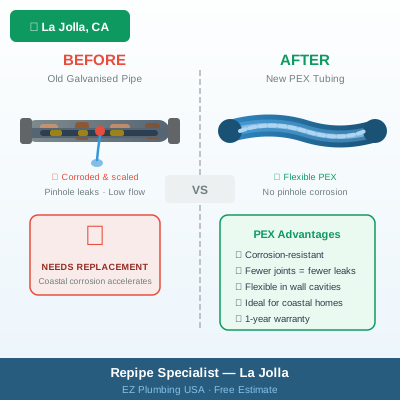
Galvanised steel supply lines, still found in some Village-area properties built before the widespread adoption of copper, are at the point where repiping is not optional — it is overdue. Galvanised corrodes from the inside out, restricting flow before it fails catastrophically.
Signs Your Home Is Ready for Repiping
- More than one pipe failure or leak in the last two years
- Discoloured or brown water, particularly from the hot taps first thing in the morning
- Pressure that has declined gradually across the whole house rather than at one fixture
- Visible corrosion, green oxide, or rust staining at exposed joints, shutoff valves, or hose bibs
- Galvanised steel supply lines still in service anywhere in the house
- A history of two or more confirmed slab leaks
- A water heater that has needed replacement ahead of expected service life
What Repiping Involves
We survey the property first — mapping the existing supply routes, identifying which runs can be accessed through wall cavities or the attic, and confirming the fixture count and water heater configuration. You receive a firm estimate before any work begins.
The work itself is staged. We maintain water service to the house throughout the job by completing and testing one section at a time before moving to the next. Access points in drywall are kept to the minimum required and are patched and prepared for finish painting when the new pipe is in and pressure-tested.
On completion, the full system is pressure-tested before we close any access points.
Choosing the Material
Copper and PEX are both sound choices, and the right answer depends on the specific property and the homeowner's priorities.
Copper is rigid, well-established, and compatible with all existing copper fittings. It has a long track record in residential supply systems and retains value well in resale.
PEX is flexible, which means fewer joints through existing wall cavities — particularly valuable in multi-level hillside homes where routing is complicated. Flexibility also means fewer fittings, and fittings are where copper fails in coastal environments. PEX is not vulnerable to the pinhole corrosion that ends copper's service life. For a La Jolla home on a hillside, PEX often makes more practical sense.
We discuss both options against your specific property and make an honest recommendation. You decide.
Related Services



 (844) 844-2719