A drain that blocks once is a nuisance. A drain that blocks every few weeks or months is telling you there is something wrong with the line — the clog is a symptom, not the root cause. In Cerritos, two factors drive most recurring drain problems: tree root intrusion and deteriorating cast iron drain lines. Understanding which one you have changes what the right fix is.
Why Cerritos Drains Behave the Way They Do
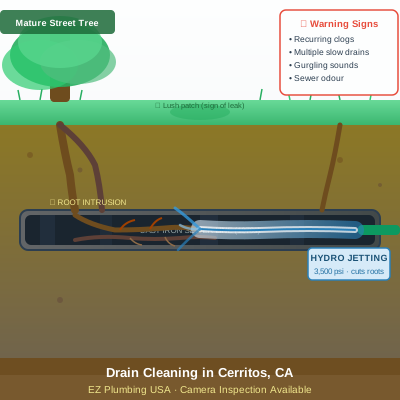
Tree roots. Cerritos was largely developed in the 1970s, and the street trees and garden trees planted around that time have had fifty years to grow. Their root systems extend far beyond the visible canopy, seeking moisture wherever they can find it — and a sewer line is a reliable source. Roots enter through joint gaps or hairline cracks, then grow inside the line until they fill it. Clearing the clog gives you temporary relief, but the roots keep growing.
Cast iron drain lines. Homes from the 1970s commonly used cast iron for drain and sewer lines. Cast iron is durable but not permanent. Over decades, the internal surface corrodes, developing a rough, pitted texture. That rough surface catches grease, hair and debris far more readily than a smooth pipe does. Clogs that used to clear quickly start returning faster and faster as the internal condition worsens.
Signs the Line Is the Problem
- Clogs that return within a few weeks of being cleared
- Multiple fixtures draining slowly at the same time
- Gurgling sounds from a toilet when a sink or shower drains nearby
- Sewage odour from drains inside the house
- Unusually lush or green grass in one strip of the garden, running along the route of the sewer line
- A drain that requires increasingly frequent clearing over time
Snaking vs Jetting vs Camera — Choosing the Right Approach
Drain snaking — a rotating cable that breaks through or retrieves a blockage — is the right tool for a single, localised clog. It is fast, inexpensive and effective when the pipe itself is in good condition and the problem is a discrete object or grease buildup.
Hydro jetting uses high-pressure water to scour the full internal diameter of the pipe. It removes grease coating from pipe walls, breaks up scale in corroded cast iron, and cuts through root intrusion rather than simply punching a hole through it. Jetting treats the condition of the pipe, not just the blockage. It is the appropriate tool when roots are involved or when a cast iron line is accumulating debris faster than a snake can keep up with.
Sewer camera inspection lets us see what is actually inside the line before recommending either approach. Running a camera means you don't pay for jetting when a snake would resolve it, and you don't pay for repeated snaking on a line that has root intrusion that only jetting or relining can address. If the camera shows a broken or collapsed section, you'll know that cleaning is a temporary measure — a liner or section replacement will be the permanent solution.
What It Costs
Drain snaking is the least expensive option. Camera inspection adds to the visit cost but prevents misdiagnosis and unnecessary work. Hydro jetting costs more than snaking but resolves problems that snaking cannot. We explain the camera footage before recommending any work, so you understand what you're paying for and why. See also: Drain Cleaning in Anaheim and Plumbing Services in Orange County for the broader service area.
Related Services



 (844) 844-2719